

For many people, the idea of ketamine-assisted therapy brings up both curiosity and hesitation.
Some wonder whether psychedelic-assisted work is safe. Others worry about losing control, becoming emotionally overwhelmed, or entering an experience that feels too unfamiliar or intense.
At the same time, more individuals and clinicians are beginning to recognize something important:
Healing is not always just cognitive.
Many people understand their patterns intellectually, yet still feel emotionally stuck inside anxiety, depression, trauma responses, disconnection, or long-standing relational dynamics that continue repeating despite insight and effort.
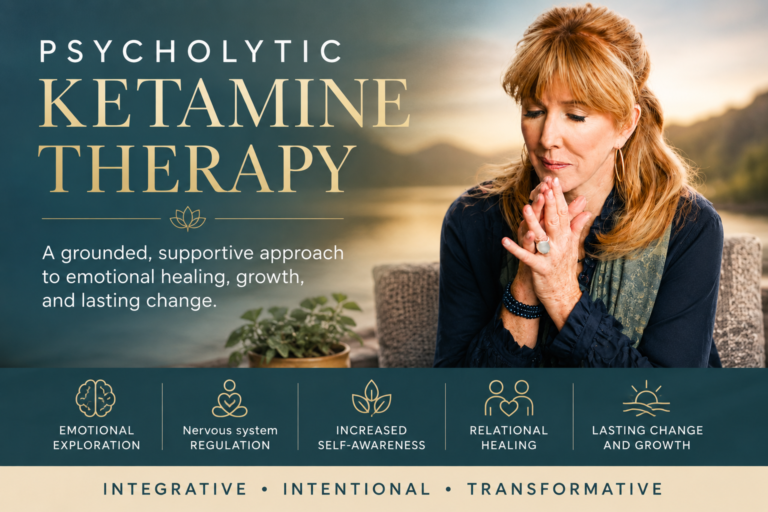
Psycholytic ketamine therapy offers a different kind of therapeutic experience — one designed to support emotional exploration, nervous system flexibility, and deeper self-awareness within a grounded, intentional, and therapeutically guided setting.
At Solutions Therapy & Mediation, Susan Regan and her team provide ketamine-related services for both clients and clinicians, while maintaining clear distinctions between therapeutic client care and professional clinician experiential learning.
What Is Psycholytic Ketamine Therapy?
Psycholytic ketamine therapy involves lower-dose ketamine sessions designed to support therapeutic exploration while allowing clients to remain emotionally present, connected, and grounded throughout the experience.
Unlike higher-dose psychedelic experiences that may create significant dissociation, psycholytic work often allows people to maintain greater awareness of themselves, their emotions, and the therapeutic process while still accessing expanded emotional insight and psychological flexibility.
This approach can support:
- Emotional exploration
- Nervous system regulation
- Increased psychological flexibility
- Greater self-awareness
- New relational and emotional perspectives
- Shifts in long-standing patterns and pathways
For many individuals, this work creates an opportunity to approach emotional material differently — with less rigidity, less defensiveness, and often greater compassion toward themselves.
The goal is not simply to “have an experience.”
The goal is to support meaningful internal change, emotional growth, and the development of healthier emotional and relational pathways over time.
Why People Explore Ketamine-Assisted Therapy
People who seek psycholytic ketamine therapy are often not looking for a shortcut.
Many are thoughtful individuals who have already spent years trying to understand themselves and improve their emotional well-being.
Sometimes they feel:
- Emotionally stuck despite years of therapy
- Trapped in repetitive relationship patterns
- Overwhelmed by anxiety or emotional activation
- Disconnected from themselves or others
- Unable to fully access deeper emotional material
- Exhausted from chronic self-protection or rumination
Often, the struggle is not a lack of insight.
It’s that the nervous system has become organized around protection, vigilance, emotional shutdown, or survival responses that are difficult to shift through willpower alone.
Psycholytic ketamine therapy may help soften some of those rigid internal pathways, allowing individuals to experience themselves, their emotions, and their relationships with greater openness and flexibility.
A More Grounded Approach to Psychedelic-Assisted Work
One of the fears many people have around psychedelic-assisted therapy is the concern that they will lose themselves in the experience.
Psycholytic ketamine therapy is intentionally designed to be more grounded and therapeutically connected.
Clients often appreciate that this approach can provide a felt sense of the psychedelic process while still allowing them to remain emotionally present and connected to themselves throughout the session.
This can feel especially supportive for individuals who value:
- Emotional safety
- Gradual exploration
- Therapeutic connection
- Nervous system regulation
- Relational support
- Intentional pacing
Healing does not have to come through overwhelm.
Often, sustainable change happens when people feel safe enough to remain connected to themselves while exploring deeper emotional experiences.
Why Preparation and Integration Matter
One of the biggest misconceptions about ketamine-assisted therapy is that the medicine itself creates lasting healing.
In reality, meaningful change often depends on the therapeutic process surrounding the experience.
This includes:
- Preparation
- Intention-setting
- Emotional processing
- Integration
- Ongoing therapeutic support
At Solutions Therapy & Mediation, clients participate in an intake process to determine readiness and appropriateness for this work.
Support is also offered in connecting clients with appropriate medical assessment providers to help create the healthiest and safest possible experience. Standard safety and clinical protocols are followed throughout the process.
A six-month commitment is generally recommended, with sessions occurring approximately once per month.
This structure allows time for:
- Preparation
- Intentional journey work
- Integration
- Emotional processing
- Sustainable therapeutic change
Healing is rarely about a single breakthrough moment.
More often, it involves gradually developing greater trust in one’s internal experience while learning how to move through emotional material in a supported and grounded way.
The Role of Integration in Lasting Change
Integration is one of the most important parts of psycholytic ketamine therapy.
Supportive integration following sessions helps clients make meaning of their experiences and apply insights to their daily lives and relationships.
Without integration, even powerful emotional experiences can remain disconnected from lasting behavioral or relational change.
The deeper questions often become:
- What emotional patterns became clearer?
- What shifted internally?
- What softened?
- What protective strategies emerged?
- What feels different in relationships?
- How can these insights be carried into everyday life?
The work is not about escaping life.
It is about becoming more emotionally connected to it.
Ketamine Therapy and Relationship Patterns
Many emotional struggles do not exist in isolation.
Anxiety, depression, emotional shutdown, hypervigilance, and chronic self-criticism are often connected to attachment experiences, relational wounds, and long-standing survival adaptations.
This is one reason ketamine-assisted psychotherapy can feel meaningful for some people.
When emotional rigidity softens, individuals may gain access to deeper relational insight, emotional honesty, and self-understanding.
People often begin noticing:
- How they protect themselves emotionally
- What triggers fear or disconnection
- How old patterns repeat in current relationships
- What vulnerability feels like in the body
- What emotional experiences have remained unresolved
Awareness creates the possibility for change.
And sometimes people need support accessing that awareness in a more embodied way.
A Small, Intentional, and Supported Group Experience
Groups are intentionally kept small to support safety, connection, and individualized attention.
A minimum of four to five participants is generally required for a group to run.
The psycholytic ketamine therapy group will be offered on the third Friday of each month from 5:30 PM–7:30 PM, beginning June 19th.
Part of the process involves learning how to journey within a safe, grounded, and supported environment while developing greater trust in one’s own healing process.
Ketamine Services for Clinicians
As interest in psychedelic-assisted therapy continues growing, many clinicians are seeking ways to better understand ketamine-assisted work ethically and experientially.
For mental health professionals, Ketamine-Assisted Group Experiential for Clinicians offers a separate professional opportunity designed specifically for clinicians.
This clinician-focused experiential supports:
- Deeper understanding of ketamine-assisted therapy
- Experiential learning
- Ethical exploration
- Professional reflection
- Enhanced therapeutic presence and integration awareness
Importantly, clinician experiential offerings are separate from client therapeutic services and are designed specifically for professional education and experiential understanding.
Is Psycholytic Ketamine Therapy Right for Everyone?
No.
Ketamine-assisted psychotherapy is not appropriate for every person or every situation.
Thoughtful providers prioritize careful screening, informed consent, emotional readiness, and collaborative decision-making.
The goal is not to convince someone into treatment.
The goal is to help individuals explore whether this approach may support their healing, growth, and emotional well-being in a safe and intentional way.
A Different Conversation About Healing
Many people carry shame about struggling emotionally — especially when they’ve already worked hard to heal.
Psycholytic ketamine therapy invites a different perspective.
Sometimes emotional healing is not about trying harder to think differently.
Sometimes it involves helping the nervous system experience enough safety, flexibility, and openness for new emotional pathways to emerge.
And sometimes the beginning of change comes through learning how to stay connected to yourself in a new way.